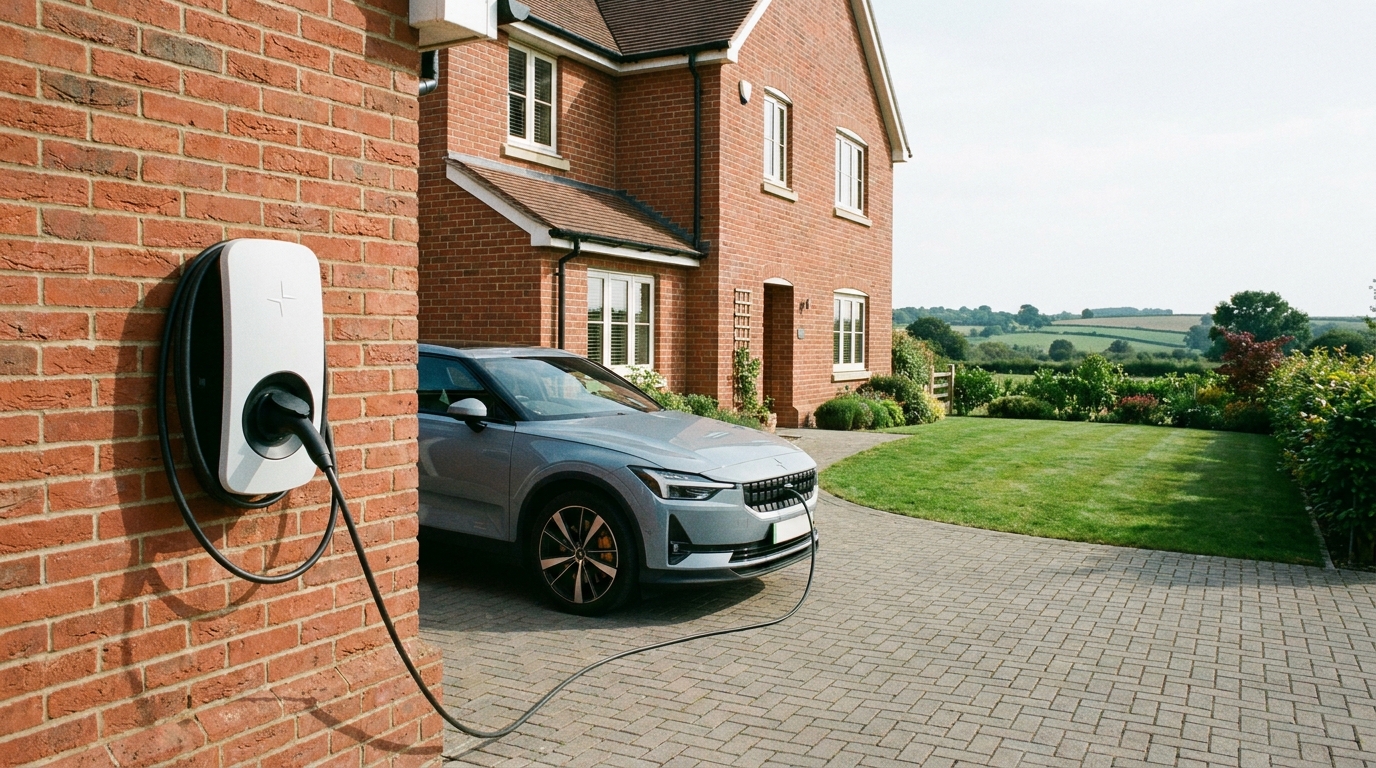
The short answer
A tethered charger has the cable permanently fixed to the wall box; an untethered charger has a socket and you plug in your own Type 2 cable. Tethered is more convenient for daily use; untethered suits households with multiple different EVs or drivers who want to take their cable to work or on trips. Both types qualify for the OZEV grant and must be installed by a qualified electrician.
When getting quotes for a home EV charger, one of the first choices is whether you want the cable permanently attached to the wall box (tethered) or a socket-only unit you connect to via your car’s own cable (untethered). Neither is technically superior — both deliver the same 7 kW — and the right choice comes down to your household’s pattern of use. This guide lays out the practical differences so you can make an informed decision before speaking to an installer.
Tethered vs untethered at a glance
- Tethered Cable fixed to the unit — plug in and go
- Untethered Socket only — use your own Type 2 cable
- Convenience Tethered wins for quick daily use
- Flexibility Untethered suits multiple EVs or cable portability
- Cable wear Tethered cable is your responsibility to maintain
- Cost difference Usually minimal between the two options
What tethered means
A tethered charge point has a cable permanently routed out of the unit, typically 5 m or 7 m long, with a Type 2 connector at the end that plugs straight into the car. When you arrive home, you simply uncoil the cable, plug in, and that’s it. There is no separate cable to store, find or forget. For the majority of households with a single EV and a covered parking space, tethered is the simplest day-to-day experience — and it is the configuration most OZEV-approved installers recommend as a first install.
What untethered means
An untethered unit has a Mode 3 Type 2 socket on the front. You use your own Type 2 cable — the one that came with your car, or one you purchase separately — to connect the socket to the car. Untethered units are slightly smaller because the cable is not wrapped around the unit, and they can be neater if wall-mounting aesthetics matter to you. The socket is weatherproofed to an appropriate IP rating for outdoor use.
| Feature | Tethered | Untethered |
|---|---|---|
| Daily ease | High — cable ready to use | Lower — need to get cable out |
| Multiple EVs (different connectors) | Less flexible | More flexible |
| Cable portability | No — fixed to wall | Yes — take it anywhere |
| Cable wear / replacement | Managed by unit | Your cable, your responsibility |
| Typical cost difference | Usually similar | Usually similar (buy own cable) |
When tethered is the better choice
Tethered suits most single-EV households. If you plug in every evening when you get home and unplug every morning, the permanently attached cable means the process is as quick as plugging in a kettle. The cable is typically 5 m, which reaches most home parking arrangements, and some units offer 7 m options for longer runs. The main thing to watch is cable maintenance: the attached cable gets plugged and unplugged daily, so inspect the connector periodically for damage, and make sure the cable lies in a way that does not create a trip hazard.
When untethered is the better choice
Untethered is worth considering if your household has or anticipates two different EVs with different connector types, if you want to take the same Type 2 cable to a charge point at work or on trips, or if the tethered cable length would not reach your parking position. Some drivers also prefer untethered simply because the unit looks slimmer on the wall. The downside is the minor inconvenience of retrieving and stowing the cable each time — not a problem if you have a dedicated hook or tidy storage nearby.
Does the choice affect the OZEV grant?
No. Both tethered and untethered charge points are eligible for the OZEV Chargepoint Grant of £350, provided they meet the smart charger requirement and are installed by an OZEV-approved installer. See the full grant guide for the eligibility rules. The installation cost tends to be similar for both types; any price difference is more likely to reflect the specific unit brand than the tethered or untethered configuration.
Connector types: a note
Almost all new electric cars sold in the UK use a Type 2 socket for AC charging, so a tethered Type 2 cable will connect to virtually any current model. Older plug-in hybrids sometimes used Type 1 connectors, which are increasingly rare. If you are buying a used EV, check the charging port before choosing a tethered unit. For choosing an installer, this is one of the first questions a good installer will ask. This page provides general information; an OZEV-approved installer can confirm the right configuration for your specific car and parking setup.
Frequently asked questions
Is a tethered or untethered EV charger better?
It depends on your use. Tethered is more convenient for daily single-EV households; untethered suits multiple EV households or drivers who want to use the same cable at home and away. Both deliver the same charge speed.
Can I change from tethered to untethered later?
Not easily — the cable is built into the unit. Switching would mean replacing the charge point. Choose carefully upfront based on your likely long-term needs.
Do I need to buy a cable for an untethered charger?
Yes. An untethered unit has a socket only, so you need a Type 2 cable. Most EVs come with one, or you can buy a suitable cable from an EV accessory retailer.
Does the cable length matter on a tethered charger?
Yes — measure the distance from your intended wall-mount position to where the car’s charging port sits when parked. Standard tethered cables are 5 m; some units offer 7 m for longer reaches.
Sources & further reading
- OZEV (Office for Zero Emission Vehicles) — EV chargepoint grant eligibility and approved installer scheme
- Energy Saving Trust — Home EV charging guidance including connector types and cable advice
- IET Wiring Regulations (BS 7671) — Mode 3 charge point installation requirements
- GOV.UK — Electric Vehicles (Smart Charge Points) Regulations 2021
This is general information about home EV charging in the UK, not electrical, planning or installation advice for your specific property. Costs, timescales and specifications vary with your home’s supply, parking arrangement and chosen installer. Always obtain written quotes from OZEV-approved installers and check grant eligibility at GOV.UK before committing.