The short answer
EV chargers are classified by speed and connection type: slow (Mode 2, three-pin), fast (Mode 3, dedicated AC wall box) and rapid (DC, public). For home use, a dedicated Mode 3 AC wall box — typically 7 kW — is the right choice. DC rapid chargers are unsuitable and impractical for domestic installation. Only a qualified, OZEV-approved installer should fit any dedicated home charge point.
The phrase “EV charger” covers equipment ranging from a granny cable you plug into a caravan hook-up to a 350 kW motorway rapid charger. Understanding the distinctions matters when choosing what to install at home, comparing quotes and making sense of public charging networks. This guide explains each type in plain English, focusing on what is practical and legal for domestic UK properties.
EV charger types at a glance
- Mode 2 (granny cable) 2.3 kW via three-pin — emergency use only
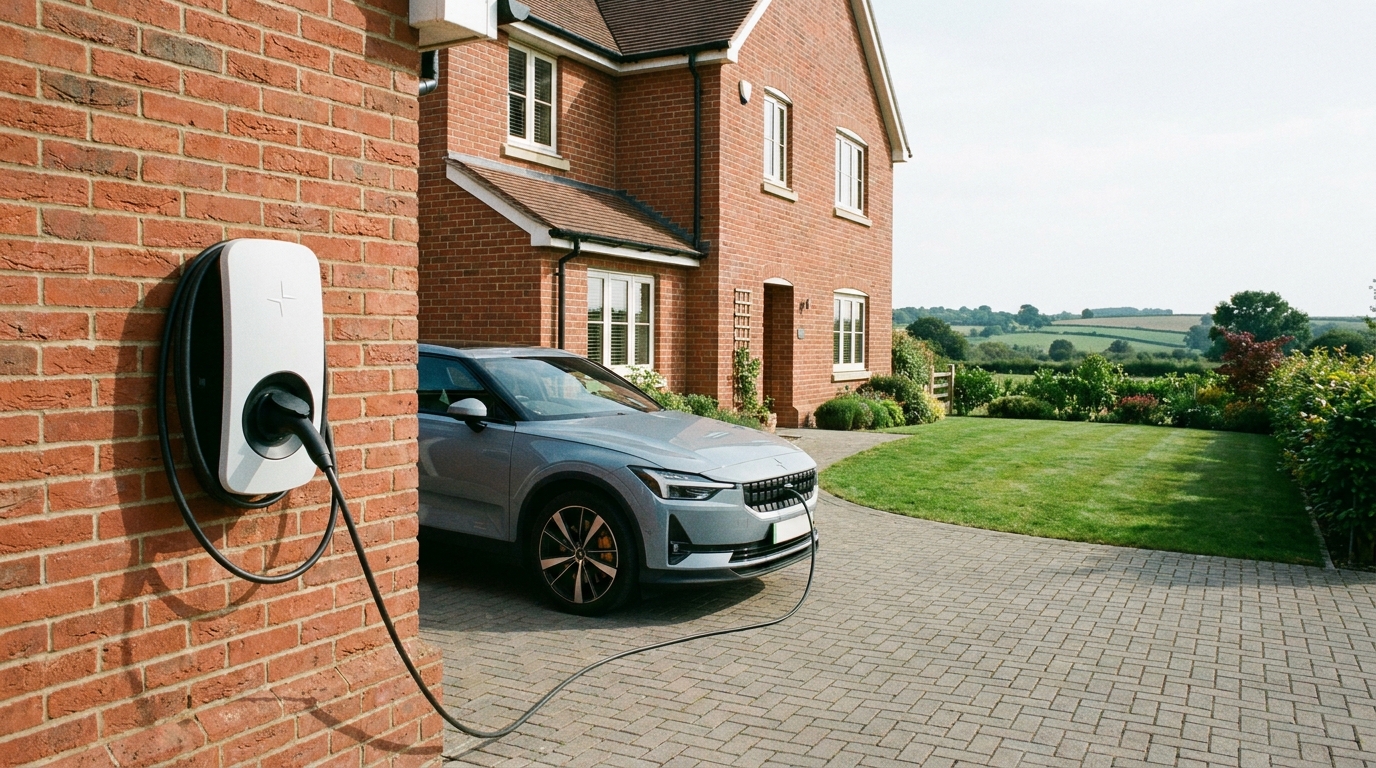
- Mode 3 (wall box) 3–22 kW AC — the standard home option
- AC rapid 22–43 kW three-phase — uncommon in homes
- DC rapid / ultra-rapid 50–350 kW — public locations only
- Home standard 7 kW single-phase Mode 3 wall box
- Grant eligible Mode 3 smart wall box via OZEV-approved installer
Mode 2: the granny cable
A Mode 2 cable plugs one end into a standard 13 A three-pin socket and the other into the car. The “control box” in the cable provides basic safety functions that a bare extension lead would not. Charge speed is limited to around 2.3 kW — roughly 8 miles of range per hour — because a domestic socket circuit is not designed for sustained high-current overnight draw. The Office for Zero Emission Vehicles and the Energy Saving Trust both advise against using Mode 2 charging as a primary method. It is a useful backup when away from home, not a long-term home solution.
Mode 3: the dedicated home wall box
Mode 3 is the standard for dedicated home and workplace charging. The charge point is a fixed unit with its own dedicated radial circuit from the consumer unit, wired to IET Wiring Regulations (BS 7671). It communicates electronically with the car using the IEC 61851 protocol, managing the charge rate dynamically and cutting power safely on detection of a fault. Most UK homes install a 7 kW (32 A) single-phase unit, which adds around 25–30 miles of range per hour and charges most cars fully overnight.
| Mode 3 output | Supply type | Range added per hour | Suitable for home? |
|---|---|---|---|
| 3.7 kW (16 A) | Single-phase | ~13 miles | Yes, but slow |
| 7 kW (32 A) | Single-phase | ~25–30 miles | Yes — most common |
| 22 kW (32 A) | Three-phase | ~75 miles | Only if three-phase supply present |
A 22 kW unit requires a three-phase electricity supply. Most UK homes have single-phase only, so 22 kW is rarely practical domestically — though it is common in commercial installations. See 3 kW vs 7 kW vs 22 kW and 7 kW vs 22 kW at home for the detail on choosing speed.
DC rapid and ultra-rapid chargers
DC chargers bypass the car’s on-board AC converter and deliver direct current straight to the battery at very high rates — typically 50 kW to 350 kW. This requires specialist three-phase high-voltage supplies, bespoke civils work and specialist equipment costing tens of thousands of pounds. DC chargers are found at motorway service stations, supermarkets and public hubs — not at homes. If you see a domestic installer offering a DC rapid charger, treat that with considerable caution; it is neither practical nor economical for ordinary residential use.
Tethered vs untethered
Within Mode 3 wall boxes, the choice is between tethered and untethered. A tethered unit has the cable permanently attached, so you simply plug in; an untethered unit has a socket and you supply your own Type 2 cable. Tethered is more convenient day-to-day; untethered suits households with multiple EVs that use different connector standards, or drivers who frequently need to take their cable elsewhere. Both types are Mode 3 and eligible for the OZEV grant if otherwise compliant.
Choosing the right type
For almost all UK homeowners, the answer is a smart, Mode 3, 7 kW wall box installed by an OZEV-approved electrician. The exceptions are homes without off-street parking (see EV charger without a driveway) and properties that already have three-phase supply and a car that can accept 22 kW AC. The installer choice guide covers what to look for when comparing quotes. This page provides general information and is not advice for your specific property; a qualified installer can assess your home’s electrical supply and recommend the right unit.
Frequently asked questions
What type of EV charger should I get at home?
For most UK homes, a 7 kW smart Mode 3 wall box is the standard recommendation. It charges most EVs overnight and is the type eligible for the OZEV £350 grant when installed by an approved installer.
Can I use a rapid charger at home?
DC rapid chargers are not practical for domestic installation — they require specialist three-phase supplies and cost far more than a home wall box. Public rapid chargers at motorway stops are the right venue for rapid top-ups.
What is a Mode 2 charger?
A Mode 2 charger is a granny cable that plugs into a standard three-pin socket. It delivers around 2.3 kW — useful for emergencies but not recommended as a primary home charging method due to speed and safety limitations.
What is a Mode 3 charger?
A Mode 3 charge point is a dedicated wall box on its own circuit, able to communicate electronically with the car. It is the standard for home and workplace charging in the UK, typically at 7 kW.
Sources & further reading
- OZEV (Office for Zero Emission Vehicles) — EV chargepoint grant and installer approval scheme
- Energy Saving Trust — Home EV charging and Mode 3 wall box guidance for UK drivers
- IET Wiring Regulations (BS 7671) — UK standard for EV charge point installation and wiring
- GOV.UK — Electric Vehicles (Smart Charge Points) Regulations 2021
This is general information about home EV charging in the UK, not electrical, planning or installation advice for your specific property. Costs, timescales and specifications vary with your home’s supply, parking arrangement and chosen installer. Always obtain written quotes from OZEV-approved installers and check grant eligibility at GOV.UK before committing.