The short answer
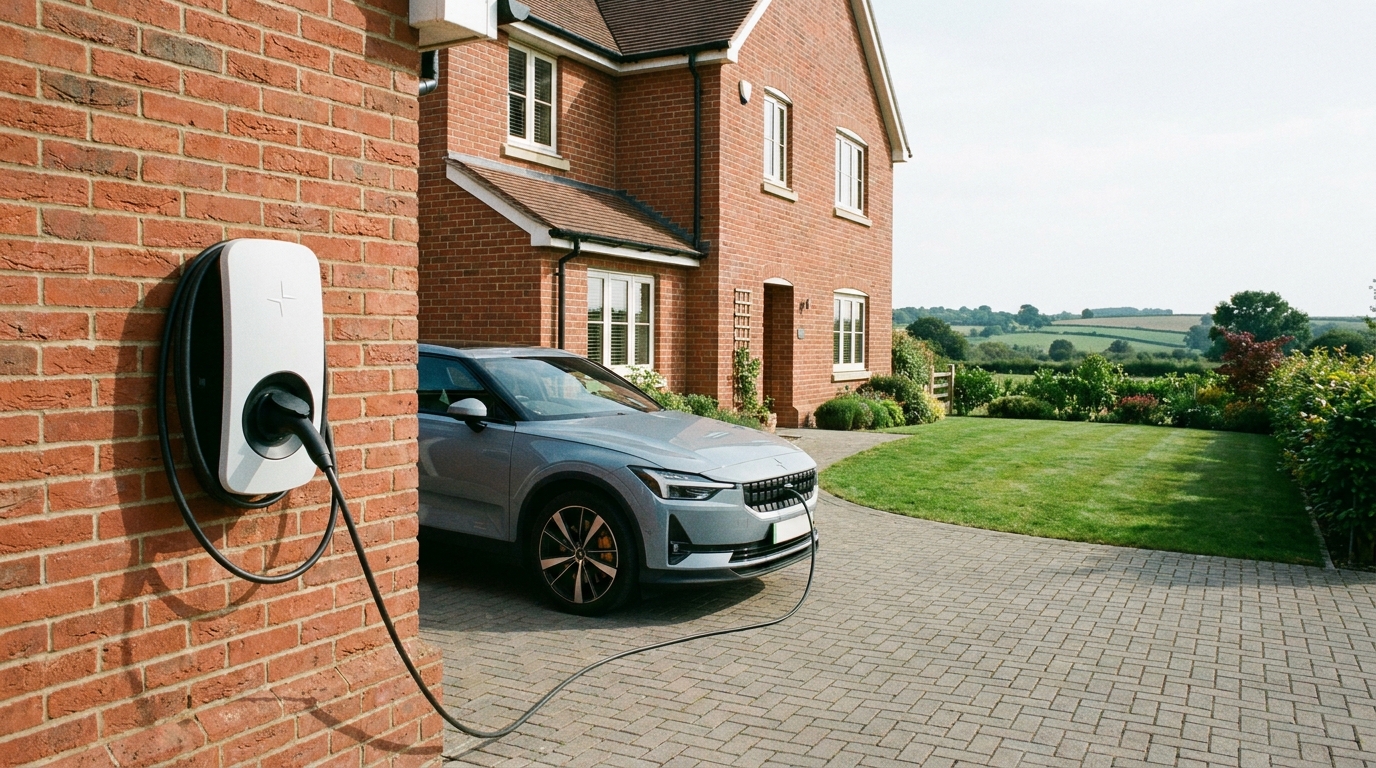
Most homeowners pay £450–£850 for a straightforward home EV charger after the £350 OZEV grant — a 7 kW smart wall box, installed and certified. Extras like long cable runs or a consumer unit upgrade add cost. Always get at least three quotes from OZEV-approved installers. See the full cost guide and grant eligibility.
The question “how much to install a home EV charger?” gets asked thousands of times a week, and the honest answer is “it depends on your home” — but the range is narrower than people expect. Most installations are straightforward: a wall box on an outside wall near the consumer unit, a short cable run, and a new dedicated circuit. For those jobs, prices are competitive and the OZEV grant makes a meaningful dent. This guide walks through every element so you know what you’re paying for.
Home EV charger cost at a glance
- Standard install (after grant) £450–£850 typical
- Without grant £800–£1,200 typical
- OZEV grant value £350, applied by installer
- Installation time 3–4 hours for a straightforward job
- What’s included Unit, cable, trunking, circuit, certificate
- Quotes needed At least 3, from OZEV-approved installers
The three components of the cost
Every home EV charger quote is made up of three elements: the hardware (the charge point unit), the electrical work (labour plus materials), and any site-specific extras. Understanding each element helps you sense-check quotes and negotiate knowledgeably.
- Charge point unit: a smart 7 kW wall box typically costs £300–£600 supply-only. Brand and features drive the range — entry-level smart units at the lower end, feature-rich units with solar integration or load management at the top. See smart vs standard charger for the feature comparison.
- Electrical labour and materials: fitting, wiring and certifying a charge point typically takes a qualified electrician 2–4 hours. Materials — cable, trunking, consumer unit breaker — add £80–£200 for a straightforward run.
- Site-specific extras: longer cable runs, groundworks, consumer unit upgrades and detached garage supplies can each add hundreds of pounds. See below for detail.
| Job type | Typical total (before grant) | After £350 OZEV grant |
|---|---|---|
| Standard (short run, modern CU) | £800–£1,000 | £450–£650 |
| Longer cable run (10–20 m) | £1,000–£1,300 | £650–£950 |
| Detached garage or outbuilding | £1,200–£2,000+ | £850–£1,650+ |
| Consumer unit upgrade needed | +£400–£900 extra | Same, grant applied to charger element |
What the £350 OZEV grant covers
The OZEV (Office for Zero Emission Vehicles) Chargepoint Grant contributes £350 towards the cost of one charge point per eligible driver. The grant is applied at point of sale by an OZEV-approved installer — you pay the net amount directly, and the installer claims the grant from OZEV. You cannot claim the grant retrospectively if you have already paid. The main eligibility conditions are: you must have off-street parking at the property, be installing at your primary or rented home, and have ordered or own a qualifying plug-in vehicle. The full eligibility rules are in the OZEV grant guide.
What a good quote should include
A written quote from a reputable OZEV-approved installer should clearly state: the charge point unit model and specification; whether the quote is supply-and-fit; the circuit specification (cable size, breaker rating); any trunking or groundworks required; the £350 grant deduction (if eligible); the applicable VAT rate; and the electrical certificate that will be issued on completion. Any quote that is verbal only, very vague on what is included, or that pressures you to sign on the day deserves scrutiny. See our installer checklist for more detail.
Ongoing costs to factor in
The installation is a one-off cost. The ongoing cost is your electricity consumption. The cost to charge an EV at home guide explains how to calculate your annual spend. As a rough illustration, a driver covering 10,000 miles per year in an average EV uses around 2,000–3,000 kWh annually for charging — at 24p/kWh that is roughly £480–£720 per year; on a cheap overnight EV tariff at 10p/kWh, as little as £200–£300. A smart charger makes the scheduling that unlocks these savings automatic. These are typical illustrations; costs depend on your car, tariff and mileage. This page is general information, not a quote; always obtain written prices from OZEV-approved installers for your specific property.
Frequently asked questions
Is there a cheaper way to get an EV charger?
The OZEV grant reduces the cost by £350, and comparing multiple quotes finds competitive pricing. DIY installation is not legal for a dedicated circuit — the work is notifiable under Building Regulations Part P and must use a qualified electrician.
Why do quotes vary so much?
Unit brand, cable run length, consumer unit condition, local labour rates and whether groundwork is needed all vary. Get at least three quotes from OZEV-approved installers to understand the range for your specific job.
Do I pay VAT on a home EV charger installation?
As of 2026, domestic EV charger installations attract reduced VAT. Check the current HMRC guidance or ask your installer, as rates can change.
How long does the installation take?
A straightforward job typically takes 3–4 hours. Longer cable runs, outbuilding supplies or consumer unit upgrades take longer — sometimes requiring a second visit.
Sources & further reading
- OZEV (Office for Zero Emission Vehicles) — EV Chargepoint Grant guidance and approved installer scheme
- Energy Saving Trust — Home EV charging and smart charging cost advice for UK drivers
- IET Wiring Regulations (BS 7671) — EV charge circuit sizing and installation certification
- GOV.UK — OZEV grant terms and Building Regulations Part P compliance for home electrical work
This is general information about home EV charging in the UK, not electrical, planning or installation advice for your specific property. Costs, timescales and specifications vary with your home’s supply, parking arrangement and chosen installer. Always obtain written quotes from OZEV-approved installers and check grant eligibility at GOV.UK before committing.